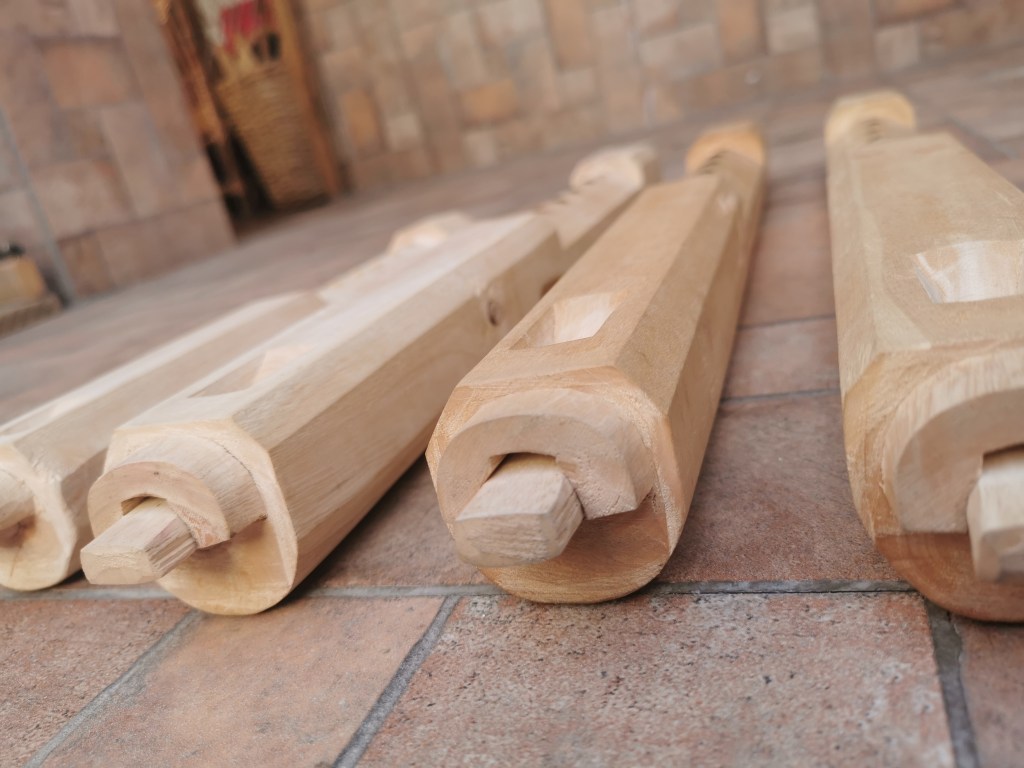
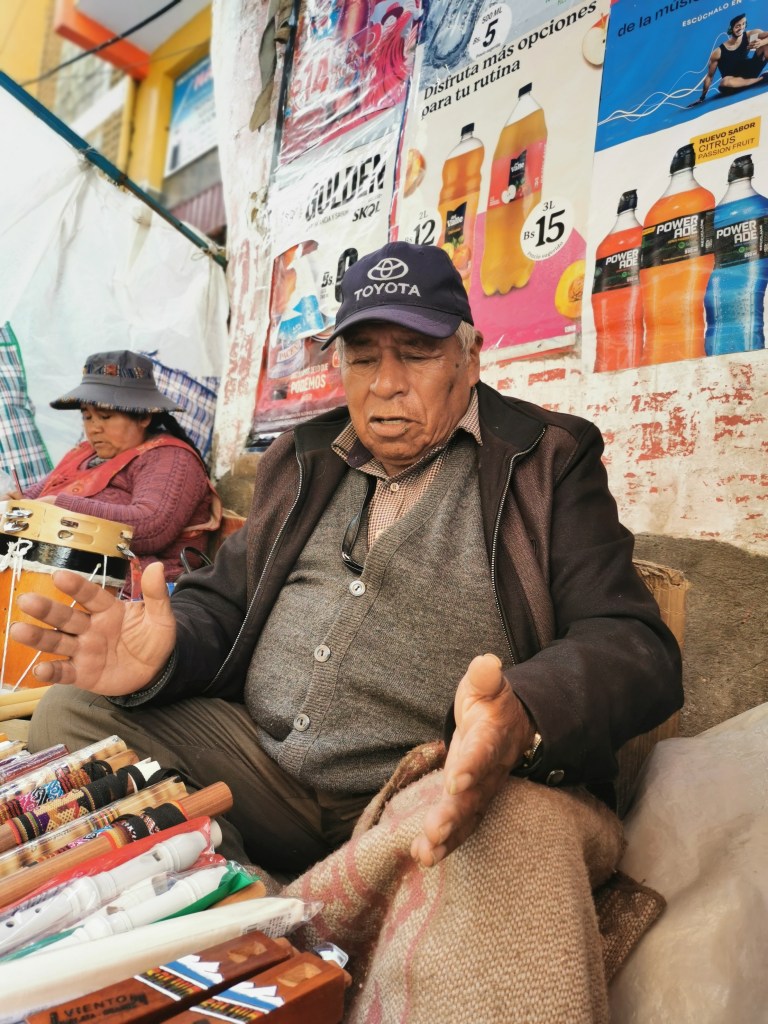
ENG: The last time I visited the Walateño flute makers of Juan Granier Street at the Garita de Lima in La Paz city was back in 2017. I visited urban-based flute makers at their street stands (ay. qhatu) and conversed with them about musical bamboos and the future of their flute making activities. Last week, I came back and was surprised that many flute makers, who I got to know some years ago, were not present anymore. The French musicologist Gerard Borras visited these urban-based Walateño flute makers in the 1990s and described in detail their process of urban migration and how many flute makers were working at Juan Granier Street at that time, publishing photos of some of them. Approximately 10 years ago, when I began my fieldwork on the Musical Bamboos of the Bolivian Andes, the number of these flute makers had already considerably decreased. In 2024, only three street stands are left. During the coronavirus pandemic, some flute makers also passed away as a consequence of a COVID-19 infection. This is the case of Don Valentin Chipana, one of the last knowledgeable tarqluriri or master tarqa makers in the cities of La Paz and El Alto. Some weeks ago, I experienced myself how difficult it is to find a professional tarqa maker nowadays. I wanted to have some of our kurawara tarqas repaired, which are made from one piece of the white wood of the tarco tree (Jacaranda mimosifolia). On some of the finger positions, the tarqa lost their vibrant tara or richa sound, which is so important to the sound aesthetics of these duct flutes. To me it seemed to be a problem of humidity that made the blog swell. Only very experienced tarqa flute makers can solve this problem through sandpapering the airduct and labium and putting the blog again in a very particular position. The other person, who passed away, was the rural-style qina and pinkillu maker Esteban Quispe, who was the son of Pascual Quispe, a collaborator in Borras’s research on tupu measuring sticks in the 1990s. Everytime we talked, he always mentioned how things were better during the time of his father. He sometimes complained about his decreasing sales, and that he would not earn well. Suddenly, in one conversation, he held up a bundle of tuquru-made tupu, the number of which was unidentifiable to me by a single glance, and said: “Look, do you know what these are? These are the tupu of my father”. “Yes”, I responded, followed by an explanation that I have read about them in Borras’s work. Esteban could well remember the French researcher. He must have been in his late 20s by the time Borras had visited La Paz. He raised another smaller bundle of about half a dozen tupu only and said: “I don’t use the tupu of my father anymore. I only use these ones, if at all”. He continues to explain that he actually does not earn well precisely because of “only” making autochthonous flutes. In his own words: “Those who make professional zampoñas and quenas, they can perhaps earn well and survive. But I, I cannot! I only make these autochthonous flutes that nobody wants!” In a way, I was used to his frankness. When I consulted him about collaborating on my research, mentioning the cooperation between his father and the French musicologist in the 1990s, he honestly said that he had no interest, although he assured me that it would be an important topic. He mentioned several reasons, for example, that he was “too old for these kind of things”, and that he does not see any sense in collaborating in research about the future of musical bamboos and highland flute making when he would not even recommend his own children to continue with what he does. “With me, everything dies [out]”, he put it. He did not sound very concerned, but rather resigned, or even at peace with himself. But I guess neither of us has ever thought at that moment that his life will take such a direction a few years later under a globally unprecedented pandemic situation. At the same time, I met again and conversed with remaining flute making brothers Francisco and Felipe Torres. Both are now experienced elderly makers who know very well typical Andean sound aesthetics of rural-style flutes. I once had an interesting discussion with Don Francisco about the sounds of different panpipe bamboo types, which I cite in the sound ontology section of my article about The Sound Ecology of Musical Bamboos. We updated us, I purchased some phuna pinkillus made from different tuquru bamboos, and we agreed to continue collaborating together. If these elderly makers, at some distant or not so distant future, are not among us anymore, their knowledge about Andean music and musical bamboos will be lost.


ESP: La última vez que visité la calle Juan Granier en la Garita de Lima de la ciudad de La Paz fue en 2017. Visité a los luririsen sus puestos (ay. qhatu) y conversé con ellos sobre los bambúes musicales y el futuro de sus prácticas de construcción de flautas andinas. La semana pasada, volví y me sorprendió que muchos lluriris, que llegué a conocer hace algunos años, ya no estuvieran presentes. El musicólogo francés Gerard Borras visitó a los luriris walateños de la calle Juan Granier en los años 90 y describió detalladamente su proceso de migración urbana, cuántos luriris exactamente trabajaban ahí, y publicó fotos de algunos. Hace aproximadamente 10 años, cuando comencé mi trabajo de campo sobre los Bambúes Musicales de los Andes Bolivianos, el número de estos luriris ya había disminuido considerablemente. En 2024, sólo quedan tres qhatus más. Durante la pandemia de coronavirus, algunos luriris fallecieron como consecuencia de una infección por COVID-19. Es el caso de don Valentín Chipana, uno de los últimos tarqluriris de las ciudades de La Paz y El Alto. Hace algunas semanas, yo mismo experimenté lo difícil que es encontrar un tarquero profesional hoy en día. Quería hacer reparar algunas de nuestras tarqas kurawara, que están hechas de una sola pieza de la madera blanca del tarco (Jacaranda mimosifolia). En algunas de las pisadas, la tarqa perdió su sonido vibrante de tara o richa, tan importante para la estética sonora de estas flautas de conducto. A mí me pareció un problema de humedad que hizo que se hinchara la tapa. Sólo los tarqluriris más experimentados pueden solucionar este problema lijando el conducto de aire y el labio y colocando de nuevo el blog en una posición muy especial. La otra persona fallecida era el luriri de qinas y pinkillus rurales Esteban Quispe, hijo de Pascual Quispe, quien fue colaborador de las investigaciones de Gerard Borras sobre los tupus en los años noventa. Cada vez que hablábamos, siempre mencionaba cómo las cosas eran mejores en la época de su padre. A veces se quejaba de la disminución de sus ventas y de que no ganaría bien. De repente, en una conversación, levantó un atado de tupus hechos de tuquru, cuyo número no pude identificar a la primera vista, y dijo: “Mira, ¿sabes lo que son? Son los tupus de mi padre”. “Sí”, respondí, y le expliqué de que había leído sobre ellos en el trabajo de Borras. Esteban recordaba bien al investigador francés. Debía de tener unos veinte años cuando Borras había visitado la ciudad de La Paz. Levantó otro atado más pequeño de media docena de tupus solamente y dijo: “Ya no uso los tupus de mi padre. Sólo uso éstos, siquiera”. Continuó explicando que en realidad no gana bien precisamente por hacer “sólo” flautas autóctonas. En sus propias palabras: “Los que hacen zampoñas y quenas profesionales, tal vez puedan ganar bien y sobrevivir. Pero yo, ¡yo no puedo! Sólo hago estas flautas autóctonas que nadie quiere.” De alguna manera, yo estaba acostumbrado a su franqueza. Cuando le consulté sobre la posibilidad de colaborar en mi investigación, mencionando la colaboración entre su padre y el musicólogo francés en los años noventa, me dijo sinceramente que no tenía ningún interés, aunque me aseguró que sería un tema importante. Mencionó varias razones, por ejemplo, que era “demasiado viejo para este tipo de cosas”, y que no veía ningún sentido a colaborar en una investigación sobre el futuro de los bambúes musicales y la construcción de flautas andinas cuando ni siquiera recomendaría a sus propios hijos que siguieran con lo que él hace. “Conmigo, todo se muere”, dijo. No parecía muy preocupado, sino más bien resignado, o incluso en paz consigo mismo. Pero supongo que ninguno de los dos pensó en ese momento que su vida tomaría ese rumbo unos años más tarde en una situación pandémica sin precedentes a escala mundial. Al mismo tiempo, me reencontré y conversé con los hermanos Francisco y Felipe Torres, que siguen fabricando aerófonos autóctonos en la calle Juan Granier. Ambos son ahora luriris mayores que conocen muy bien la típica estética sonora andina de los aerófonos autóctonos. Una vez tenía una interesante conversación con Don Francisco sobre los sonidos de los distintos tipos de las chhallas, que cito también en la sección de ontología sonora de mi artículo sobre La ecología sonora de los bambúes musicales. Nos pusimos al día, compré algunos phuna pinkillus hechos de diferentes tuqurus, y acordamos seguir colaborando juntos. Si estos luriris mayores, en un futuro lejano o no tan lejano, ya no están entre nosotros, gran parte de los conocimientos sobre música y bambúes musicales en el Altiplano se perderán.
 The Musical Bamboos of the Bolivian Andes