ENG: For the march interview in 3preguntas@, I am happy to invite Henry Spiller. Henry Spiller is Professor Emeritus in the Department of Music at the University of California, Davis (here). His research focuses on Sundanese music and dance from West Java, Indonesia, and on issues of gender and sexuality in music. His most recent monograph, Archaic Instruments in Modern West Java: Bamboo Murmurs, focuses on revivals of Sundanese bamboo musical instruments in twenty-first century Bandung, the capital city of West Java, Indonesia.
(1) What do you want to express with your recent book title “Bamboo Murmurs”?
Bamboo is deeply embedded in Sundanese culture. As I worked on this project, which engages with some remarkable modern/post-modern applications of bamboo to twenty-first century music-making in Bandung, it occurred to me that examining the roles bamboo plays in folk wisdom (e.g., proverbs) might provide insights into the material’s significance in Sundanese thought. And, indeed, proverbs are a rich resource. I begin each chapter of the book with a Sundanese proverb that reflects the particular character of the bamboo music I describe therein. I also wanted to get across the idea that the sounds of bamboo provide an undercurrent—both literal and metaphorical—to Sundanese music and Sundanese life. I fell in love with the proverb that inspired the book’s title: “Kawas awi sumear di pasir”— “like bamboo murmuring on the hill.” It evokes an image of a large stand of bamboo in the distance swaying mellifluously in the wind, creating a subtle, distant, musical sound. For me, the English word “murmur” is exceptionally musical—it is onomatopoeic in its suggestion of a kind of understated background noise, not quite legible; and, like many Indonesian words, but unlike most English words, it is reduplicative. It evokes exactly the omnipresent atmosphere of sound and ideas for which I was looking. Full disclosure: my Sundanese language skills are not good enough to know whether “sumear” has the same poetic qualities as “murmur.” For many, I learned, the proverb is not even positive— “making noise for no good reason,” as the Dutch lexicographer Eringa puts it. But Sundanese scholar Rusnandar interprets it to suggest “mutual cooperation, acting in harmony”. For me, “Bamboo Murmurs” epitomizes bamboo’s sonic, physical, and cultural qualities that make it a fundamental part of Sundanese culture.
(2) How do musical instrument makers in Bandung, West-Java (Indonesia) know through and with bamboo?
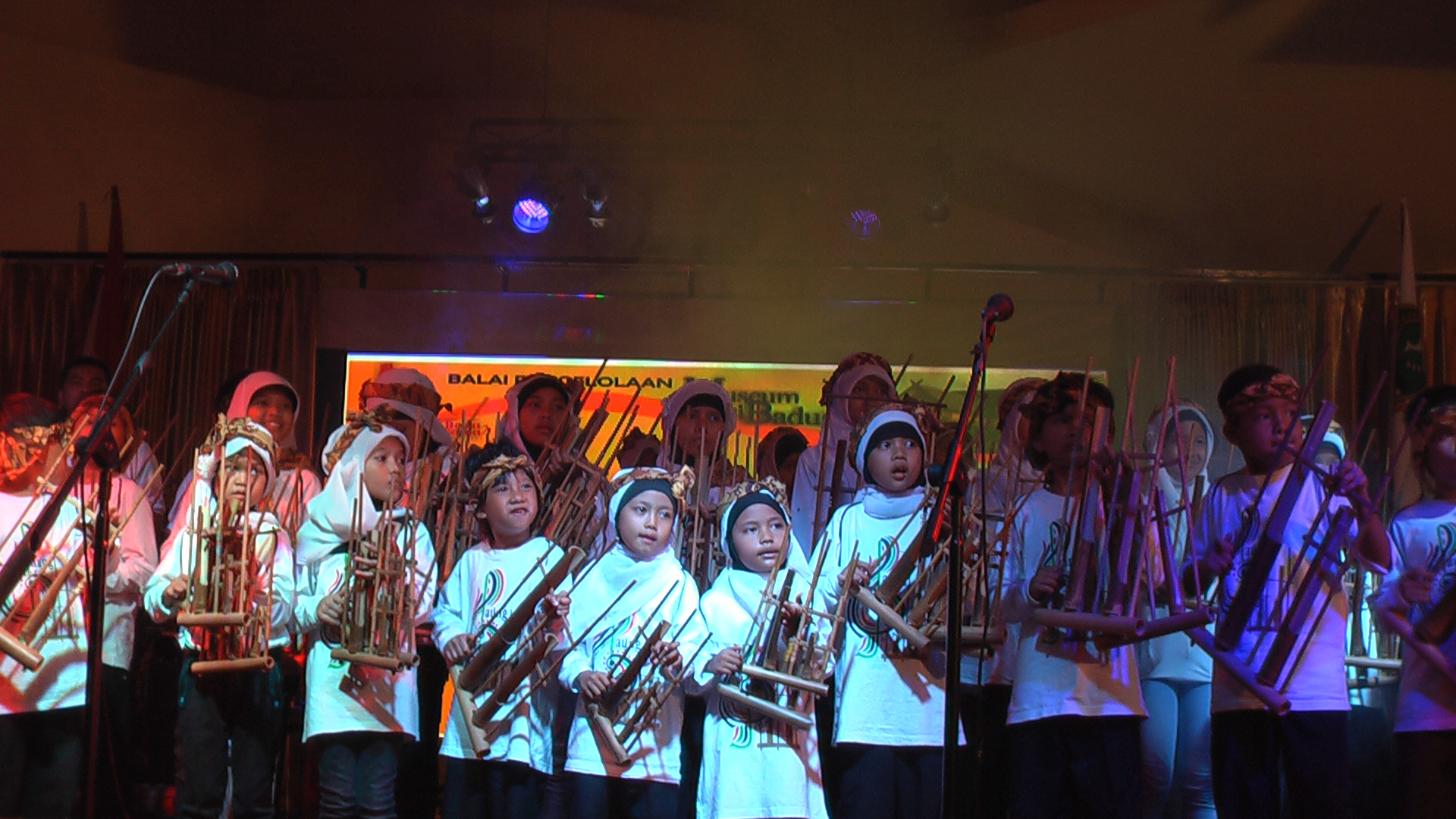
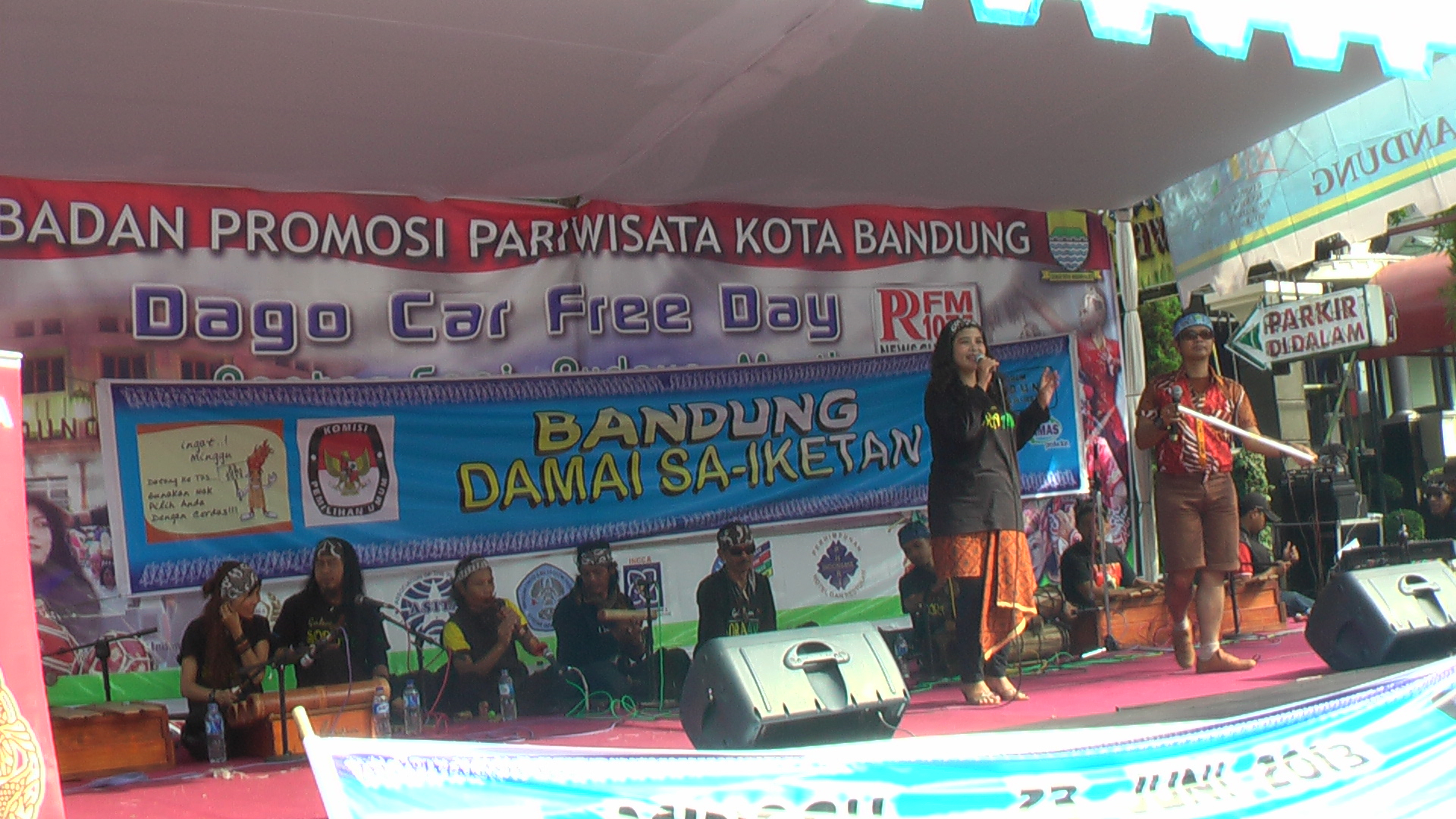
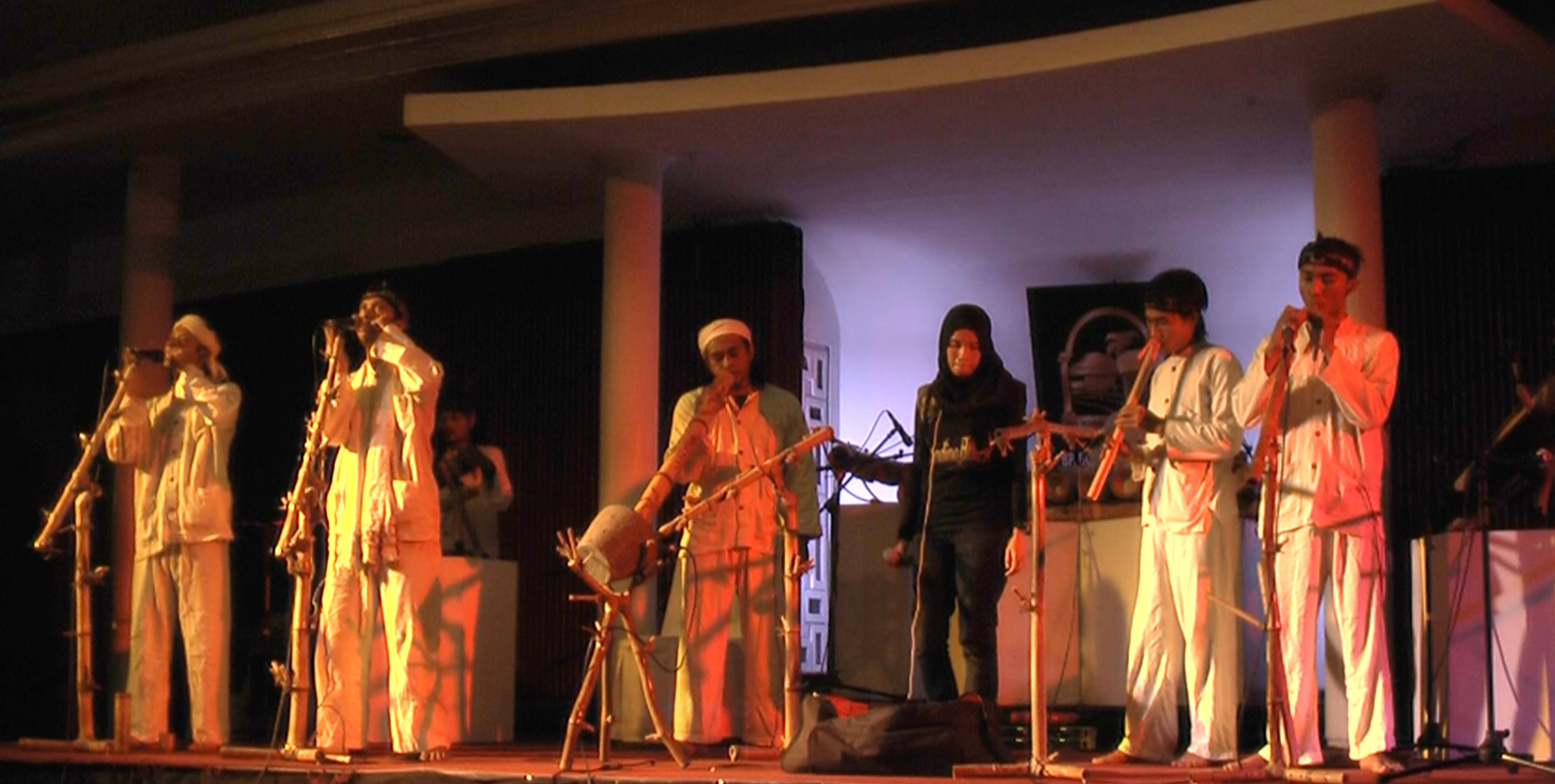
The Bandung-based instrument makers and musicians I consulted when researching the book are innovative in their interpretations of bamboo’s historical significance, cultural importance, and creative potential. The book focuses on three approaches: (1) Angklung are bamboo rattles associated with rural Sundanese harvest ceremonies. Traditional angklung ensembles usually involved many musicians, each playing a single angklung rattle, whose parts interlocked to create a whole greater than the sum of its parts—in effect modeling the role of cooperation in rural agricultural communities (here). Since the 1930s, diatonically tuned angklung ensembles have played covers of western music that insist on foregrounding the cooperative nature of Sundanese angklung music. (Blue Danube Waltz, Bohemian Rhapsody). (2) Galengan Sora Awi (GSA) is a group of amateur musicians and instrument makers who have created a novel ensemble of bamboo musical instruments to play an eclectic repertory of traditional and popular songs. GSA’s approach to so-called “traditional” Sundanese music is innovative, even radical, in that it invents an entirely new instrumental ensemble to unify formerly incompatible genres (here). One of the group’s members, Abah Akim, makes most of their bamboo instruments. For celempung (idiochord tube zither), he was inspired by the specimens he encountered (for instance, the celempung in the display case in the lobby of Taman Budaya, where the group rehearses), and then experimented to make them sound better—experiments with the thickness and width of the strings, for example. Another of his innovations is the rubber covering on the end struck by the player’s bare hand. (3) Karinding Attack plays globally inspired heavy metal music on revivals of archaic, extinct instruments, namely karinding (bamboo jaw harp) and celempung (here). This group has inspired a youth subculture of karinding playing, along with revivals of Sundanese language and sartorial fashions. One of Karinding Attack’s key founding members is Kimung, a musician (notably with one of Bandung’s most influential death metal bands, Burgerkill), historian, teacher, tireless advocate of bamboo music, and author. Kimung’s recent book, Sejarah Karinding Priangan (here), is chock full of information (in Indonesian) about the karinding in West Java, drawn from an astonishing variety of sources. For all of these groups, bamboo musical instruments provide a vital connection to Sundanese history. The contrasts between them are striking, however. Diatonic angklung groups make music in a decidedly old-fashioned Sundanese manner: individual musicians, each responsible for a single pitch, create complex polyphonic textures through close cooperation. They perform a conservative global repertory of popular music by “covering” it with the distinctive sound of Sundanese bamboo rattles. GSA pays homage to a variety of venerable traditional Sundanese musical genres by performing them on new, idiosyncratic instruments and combines long-standing Sundanese bamboo technologies with global discourses of environmentalism to address their neighborhood’s grassroots concerns about pollution and sustainability. Karinding Attack does exactly the contrapositive: they play globally inspired metal music on revivals of archaic, all but extinct instruments, thus localizing an international language of anti-establishment protest—heavy metal music—by rendering it on instruments that were almost wiped off the face of the earth by hegemonic modernity.
(3) How are bamboos employed in musical instrument making?
Sourcing and preparing bamboo for building instruments involves quite a lot of intergenerational wisdom. The well-known maker of diatonic angklung, Handiman Diratmasasmita, for example, is grateful to his mentor, Daeng Soetigna (the inventor of diatonic angklung), for his knowledge. Handiman told me, “I was lucky to learn how to choose bamboo, how to dry it … I make angklung myself from the bamboo forest. I choose the bamboo while it’s still growing. This is not the case with other makers. The process of putting it aside, and making, I learned this from Daeng. About the quality of the raw materials, the voice. The bamboo has to be left to cure, which gives it its voice. You can’t make an angklung in a day. You have to let it rest, then rest again. Then tuned. They must be tuned several times.” Handiman uses a veriety of different kinds of bamboo. He uses bambu temen (Gigantochloa pseudoarundinacea) and bambu hitam (Gigantochloa atroviolacea) for the sounding parts of the instruments, while the racks are made from bambu gombong (Dendrocalamus asper). Temen and hitam are good for angklung because they have straight stems and long nodes. Asep Nata is an experimental instrument maker who has focused his energy on karinding. He told me that he likes to use awi surat bamboo to make karinding because its name (surat means refined) suggests purity. He said that some people might shy away from karinding because they associate it with backwards ways and guna-guna (black magic). But making the instruments from awi surat helps to remove this stigma. He also will use black bamboo, such as is used by angklung makers, but he worries that the black color helps reinforce links with undesirable connotations. Asep Nata also makes kardining out of recycled materials, such as credit/phone cards (here). Another karinding maker/artist, Mang Teddy also talked about which bamboo to use for karinding: It must be very, very straight grained, he said, and come from a relatively flat section of the bamboo’s round form. He told me that the way bamboo grows is as follows: one shoot finds its way straight up, then its adik-adik (younger siblings) follow it, pushing against it, to follow the path the first stalk blazed. The section where the adik has grown against the original stalk is a little flattened out because of its pressure, and its grain is very straight because it had fewer obstacles to make it to the top, so it makes for the ideal bit of perfectly grained bamboo for karinding. Mang Teddy also explained how bamboo is like manusia (people)—bamboo stalks never grow alone, and they always grow strong together in groups. Mang Teddy’s philosophical message: We learn a lot about how to be people by observing bamboo. On more practical matters, my interlocutors all agreed that it is increasingly difficult to find suitable bamboo in urban Bandung. On a walk through some patches of bamboo, my companion pointed out that all the bamboo was very young and not useful for musical instruments. There used to be a lot more usable materials within easy reach, but no longer. My interlocutors commiserated about how the price of good bamboo was rising in Bandung, especially the large bamboo varieties that are useful for making musical instruments. However, bamboo music thrives in modern West Java. Musicians and instrument makers pay homage to bamboo’s rich historical legacy; promote its sustainability; and find exciting ways to make bamboo the centerpiece of a stunning variety of contemporary musical expressions.


ESP: Para la entrevista de marzo en 3preguntas@, invito a Henry Spiller. Henry Spiller es Profesor Emérito en el Departamento de Música de la Universidad de California, Davis (aquí). Su investigación se centra en la música y danza sundanesa de Java Occidental, Indonesia, y en temas de género y sexualidad en la música. Su monografía más reciente, Instrumentos arcaicos en la Java Occidental moderna: Murmullos de bambú, explora los resurgimientos de los instrumentos musicales de bambú sundanés en Bandung del siglo XXI, la capital de Java Occidental, Indonesia.
(1) ¿Qué quieres expresar con el título de tu reciente libro “Murmullos de bambú”?
El bambú está profundamente arraigado en la cultura sundanesa. Mientras trabajaba en este proyecto, que aborda algunas aplicaciones modernas/postmodernas notables del bambú en la creación musical del siglo XXI en Bandung, se me ocurrió que examinar los papeles que el bambú desempeña en la sabiduría popular (por ejemplo, proverbios) podría proporcionar información sobre la importancia del material en el pensamiento sundanés. Y, de hecho, los proverbios son un recurso rico. Comienzo cada capítulo del libro con un proverbio sundanés que refleja el carácter particular de la música de bambú que describo en él. También quería transmitir la idea de que los sonidos del bambú proporcionan un trasfondo, tanto literal como metafórico, a la música y a la vida sundanesa. Me enamoré del proverbio que inspiró el título del libro: “Kawas awi sumear di pasir”—”como el bambú murmurando en la colina”. Evoca la imagen de un gran grupo de bambú en la distancia balanceándose melifluamente en el viento, creando un sonido musical sutil y lejano. Para mí, la palabra inglesa “murmur” es excepcionalmente musical: es onomatopéyica en su sugerencia de un tipo de ruido de fondo discreto, no del todo legible; y, como muchas palabras indonesias, pero a diferencia de la mayoría de las palabras inglesas, es redundante. Evoca exactamente la omnipresente atmósfera de sonido e ideas que estaba buscando. Revelación completa: mis habilidades en el idioma sundanés no son lo suficientemente buenas como para saber si “sumear” tiene las mismas cualidades poéticas que “murmur”. Para muchos el proverbio ni siquiera es positivo— “hacer ruido sin una buena razón”, como lo define el lexicógrafo holandés Eringa. Pero el estudioso sundanés Rusnandar lo interpreta como “cooperación mutua, actuar en armonía”. Para mí, “Murmullos de bambú” epitomiza las cualidades sónicas, físicas y culturales que hacen del bambú una parte fundamental de la cultura sundanesa.
(2) ¿Cómo saben los fabricantes de instrumentos musicales en Bandung, Java Occidental (Indonesia) a través del bambú y con él?
Los fabricantes de instrumentos y los músicos en Bandung que consulté durante la investigación del libro son innovadores en sus interpretaciones del significado histórico, la importancia cultural y el potencial creativo del bambú. El libro se centra en tres enfoques: (1) El angklung son sonajeros de bambú asociados con ceremonias de cosecha rurales sundanesas. Los conjuntos tradicionales de angklung usualmente involucraban a muchos músicos, cada uno tocando un solo sonajero angklung, cuyas partes se entrelazaban para crear un conjunto mayor que la suma de sus partes, modelando de hecho el papel de la cooperación en las comunidades rurales agrícolas (aquí). Desde la década de 1930, los conjuntos de angklung afinados diatónicamente han interpretado versiones de música occidental que insisten en destacar la naturaleza cooperativa de la música angklung sundanesa. (Vals del Danubio Azul, Bohemian Rhapsody). (2) Galengan Sora Awi (GSA) es un grupo de músicos e instrumentistas aficionados que han creado un conjunto novedoso de instrumentos musicales de bambú para tocar un repertorio ecléctico de canciones tradicionales y populares. El enfoque de GSA para la llamada música sundanesa “tradicional” es innovador, incluso radical, ya que inventa un conjunto instrumental completamente nuevo para unificar géneros anteriormente incompatibles (aquí). Uno de los miembros del grupo, Abah Akim, fabrica la mayoría de sus instrumentos de bambú. Para el celempung (cítara de tubo de idiócordo), se inspiró en los ejemplares que encontró (por ejemplo, el celempung en la vitrina del vestíbulo de Taman Budaya, donde ensaya el grupo), y luego experimentó para mejorarlos, experimentando, por ejemplo, con el grosor y la anchura de las cuerdas. Otra de sus innovaciones es la cubierta de goma en el extremo que golpea el jugador con la mano desnuda. (3) Karinding Attack toca música heavy metal inspirada globalmente en revivals de instrumentos arcaicos, casi extintos, por ejemplo karinding (arpa de mandíbula de bambú) y celempung (aquí). Este grupo ha inspirado una subcultura juvenil de tocar karinding, junto con revitalizaciones del idioma y las modas sartoriales sundanesas. Uno de los miembros fundadores clave de Karinding Attack es Kimung, un músico (notablemente con una de las bandas de death metal más influyentes de Bandung, Burgerkill), historiador, maestro, incansable defensor de la música de bambú y autor. El libro más reciente de Kimung, Sejarah Karinding Priangan (aquí), está lleno de información (en indonesio) sobre el karinding en Java Occidental, generada desde una sorprendente variedad de fuentes. Para todos estos grupos, los instrumentos musicales de bambú proporcionan una conexión vital con la historia sundanesa. Sin embargo, los contrastes entre ellos son sorprendentes. Los grupos de angklung diatónico hacen música de una manera decididamente sundanesa de antaño: músicos individuales, cada uno responsable de un solo tono, crean texturas polifónicas complejas a través de una estrecha cooperación. Interpretan un repertorio global conservador de música popular al hacer “covers” con el sonido distintivo de los sonajeros de bambú sundaneses. GSA rinde homenaje a una variedad de venerables géneros musicales sundaneses tradicionales al interpretarlos con instrumentos nuevos e idiosincráticos, y combina las tecnologías de bambú sundanés con discursos globales de ambientalismo para abordar las preocupaciones sobre la contaminación y la sostenibilidad de su vecindario. Karinding Attack hace exactamente lo contrario: tocan música metal inspirada globalmente en repeticiones de instrumentos arcaicos, casi extintos, localizando así un lenguaje internacional de protesta anti-establecimiento—la música heavy metal—al interpretarla en instrumentos que casi fueron exterminados por la modernidad hegemónica.
(3) ¿Cómo se emplean los bambús en la fabricación de instrumentos musicales?
Obtener y preparar el bambú para construir instrumentos implica una gran cantidad de sabiduría intergeneracional. El conocido fabricante de angklung diatónico, Handiman Diratmasasmita, por ejemplo, está agradecido a su mentor, Daeng Soetigna (el inventor del angklung diatónico), por su conocimiento. Handiman me dijo: “Tuve la suerte de aprender cómo elegir el bambú, cómo secarlo… Hago angklung yo mismo desde el bosque de bambú. Elijo el bambú mientras aún está creciendo. Este no es el caso con otros fabricantes. El proceso de apartarlo y fabricarlo, lo aprendí de Daeng. Sobre la calidad de las materias primas, la voz. El bambú debe dejarse curar, lo que le da su voz. No se puede hacer un angklung en un día. Hay que dejarlo descansar, luego descansar de nuevo. Luego afinarlo. Deben ser afinados varias veces.” Handiman utiliza una variedad de diferentes tipos de bambú. Él usa bambu temen (Gigantochloa pseudoarundinacea) y bambu hitam (Gigantochloa atroviolacea) para las partes sonoras de los instrumentos, mientras que los soportes están hechos de bambu gombong (Dendrocalamus asper). Temen e hitam son buenos para angklung porque tienen tallos rectos y nudos largos. Asep Nata es un fabricante de instrumentos experimentales que ha centrado su energía en karinding. Me dijo que le gusta usar bambú awi surat para hacer karinding porque su nombre (surat significa refinado) sugiere pureza. Dijo que algunas personas pueden alejarse del karinding porque lo asocian con formas retrógradas y guna-guna (magia negra). Pero hacer los instrumentos del bambú awi surat ayuda a eliminar este estigma. También usa bambú negro, como el que usan los fabricantes de angklung, pero le preocupa que el color negro ayude a reforzar los vínculos con connotaciones indeseables. Asep Nata también hace karinding con materiales reciclados, como tarjetas de crédito/teléfono (aquí). Otro fabricante/artista de karinding, Mang Teddy, también habló sobre qué bambú usar para karinding: debe tener un culmo muy, muy recto, dijo, y provenir de una sección relativamente plana de la forma redonda del bambú. Me dijo que la forma en que crece el bambú es la siguiente: un brote encuentra su camino hacia arriba de manera recta, luego sus adik-adik (hermanos menores) lo siguen, empujándolo, para seguir el camino que la primera caña abrió. La sección donde el adik ha crecido contra la caña original está un poco aplanada debido a su presión, y su culmo es muy recto porque tuvo menos obstáculos para llegar a la cima, por lo que es la pieza ideal de bambú perfectamente granulado para karinding. Mang Teddy también explicó cómo el bambú es como manusia (gente): los culmos de bambú nunca crecen solos, y siempre crecen fuertes juntos en grupos. El mensaje filosófico de Mang Teddy: aprendemos mucho sobre cómo ser personas observando el bambú. Sobre cuestiones más prácticas, todos mis interlocutores estuvieron de acuerdo en que es cada vez más difícil encontrar bambú adecuado en el area urbano de Bandung. En un paseo por algunas reservas de bambú, un amigo mío señaló que todo el bambú era muy joven y no útil para instrumentos musicales. Solía haber mucho más materiales utilizables al alcance, pero ya no. Mis interlocutores se preocuparon de cómo el precio de bambú estaba aumentando en Bandung, especialmente las variedades de bambú grandes que son útiles para hacer instrumentos musicales. Sin embargo, la música de bambú prospera en la Java Occidental moderna. Músicos y fabricantes de instrumentos rinden homenaje a la rica herencia histórica del bambú; promueven su sostenibilidad; y encuentran maneras emocionantes de hacer del bambú el centro de una impresionante variedad de expresiones musicales contemporáneas.
 The Musical Bamboos of the Bolivian Andes