
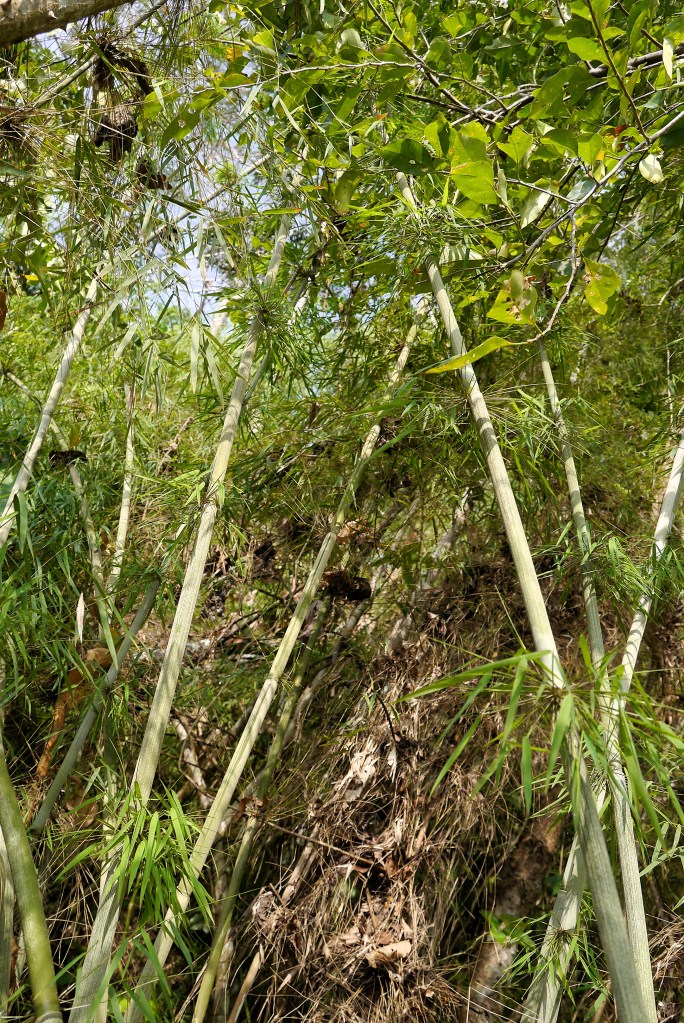
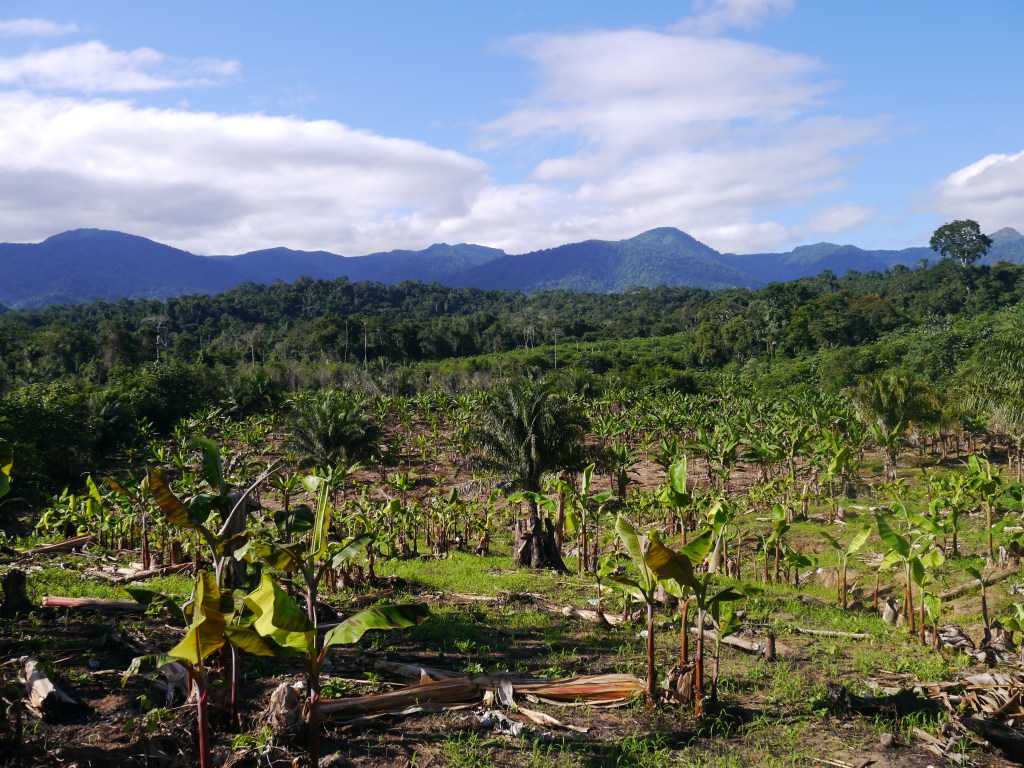
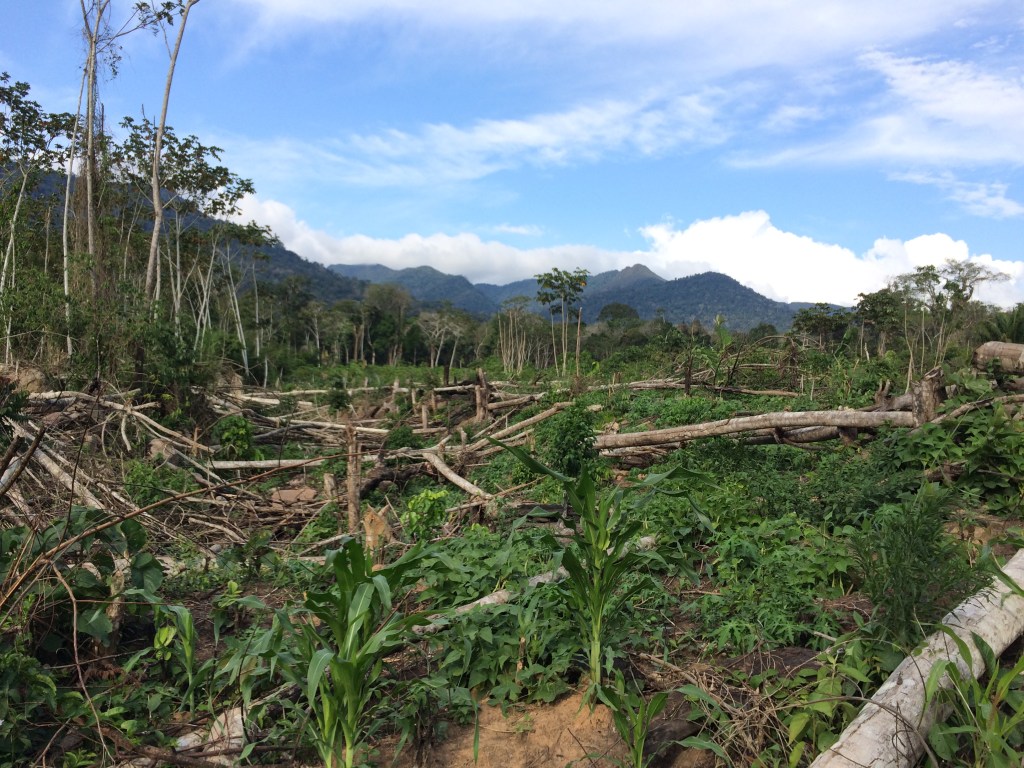
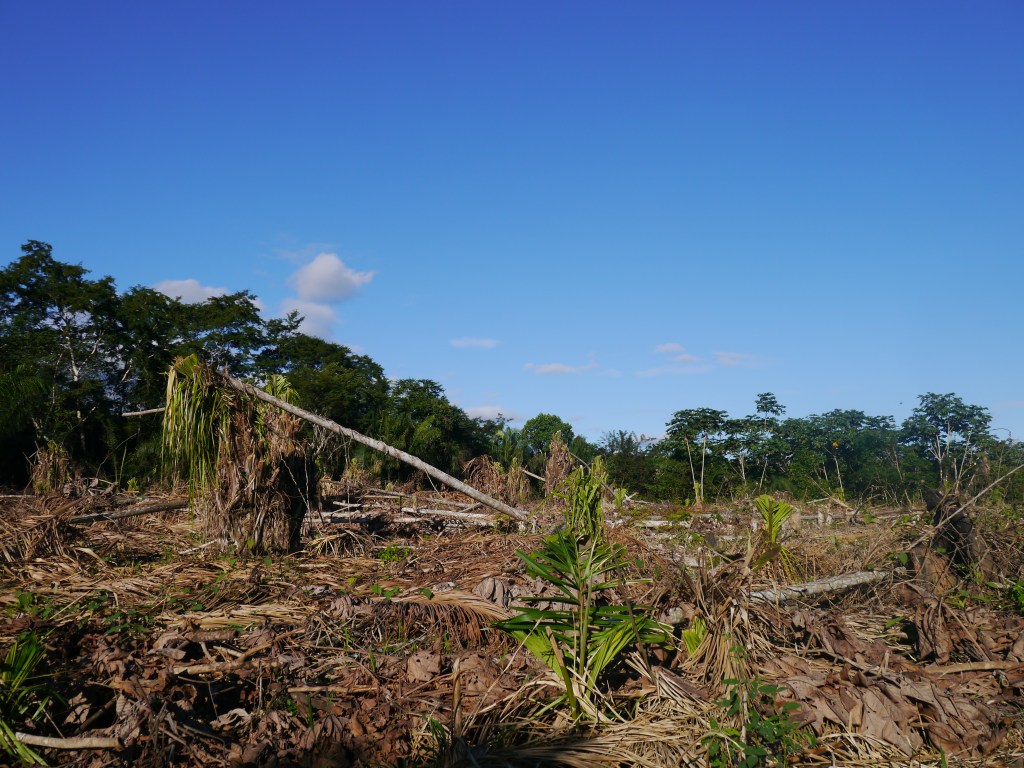
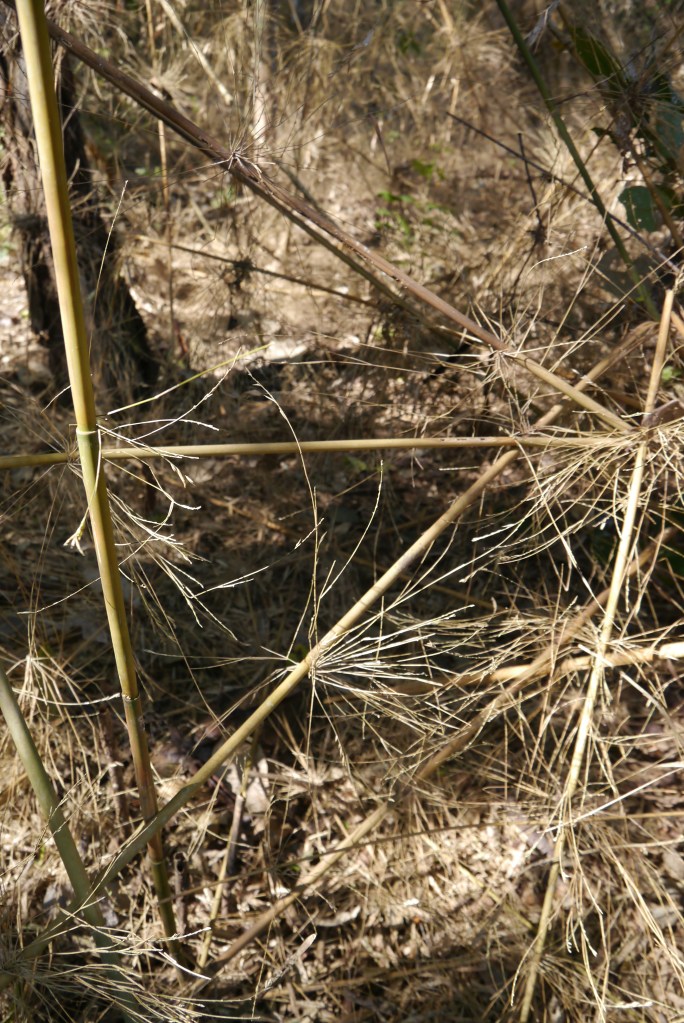
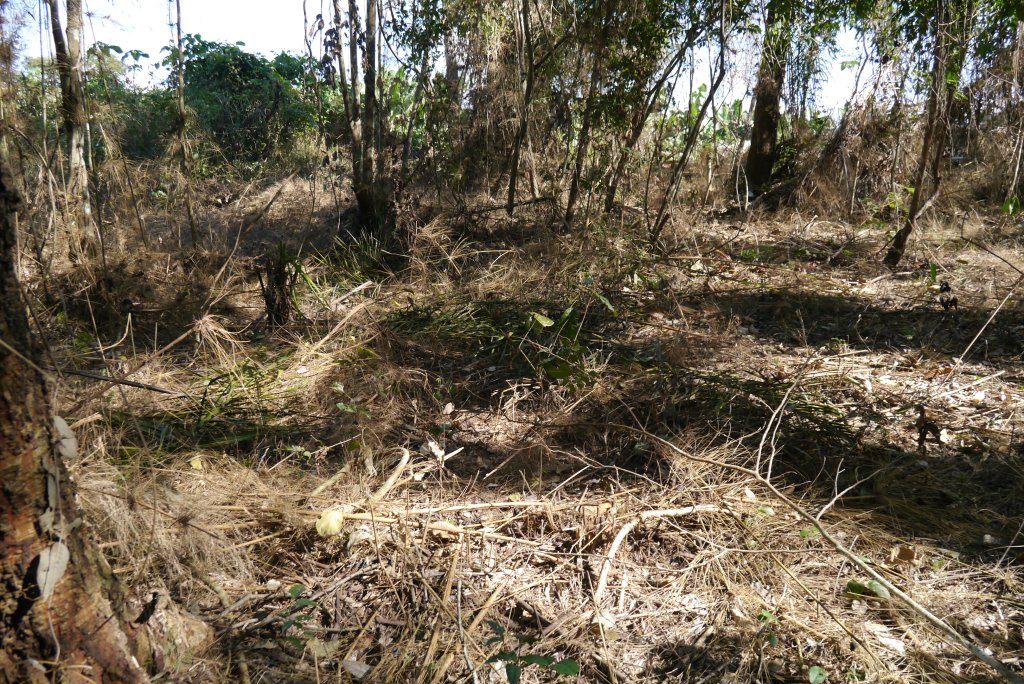
ENG: Alto Beni is not only one of the municipalities of Caranavi province (La Paz department) but also defines a natural geographic area (broader ecoregion), partially integrated within the departments of La Paz, Cochabamba, and Beni. It is situated in the syncline valley of the mid-course of the Beni River (called Alto Beni or Mosetén River) in the Andean-Amazonian piedmont or foothills. What is commonly known as ‘chhalla de Alto Beni’ is actually two different variants (lluq’a and qipu type), growing in distinct areas in the Alto Beni region. The lluq’a variant is sourced on the left side of the Beni River around San Antonio and towards San José in the southeast part of the declared Mosetén Indigenous territory (sp. Tierra Comunitaria de Origin or simply TCO), while the qipu variant grows on the right side of the Beni River towards Inicua Bajo in the northwest part of the Mosetén TCO. Both have distinct ecological life cycles suggesting that they are two different bamboo species. In 2018, I accompanied the chhallero René Condori during harvest of the qipu chhalla type. Before we started collecting, René initially instructed me how to recognise mature culms and cut them correctly. This very experienced chhallero explained to me that mature culms change colour from bright and shiny green into a darker green and later yellowish/grey tone. Once in the rainforest, with chhalla clumps in front of us, he pointed out the mature culms to be collected. These were situated in the centre of the clumps, while young and premature lignifying culms were growing towards its periphery. Depending on the distribution of culms, it was sometimes difficult to reach the centre without damaging younger culms in the periphery. I observed how René managed to cut a tunnel-like entrance into the clump and removed mature culms from the centre. He even left behind some mature or overaged culms, so that soft immature and lignifying ones on the periphery do not collapse. René further stated that mature culms should be cut from the first or second node onwards, counting four or five successive internodes. This is the standard length of traded chhalla bamboo culms, which facilitates counting internodes in the traded bundle (ay. qhiwi). These qhiwis, a word which derives from the Aymara verb qhiwiña meaning ‘to carry a large and heavy thing over the shoulder’, consist of 300 culms that each have four or five internodes. As tuquru tubes are longer and additionally sold per unit (not in a bundle), tuquru bamboos are usually cut per internode. Both chhalla and tuquru internodes are cut above the nodes since makers use internodes from the node downwards, with the node becoming the flute’s foot joint. The part of the culm leaves is moister and softer and therefore not suitable for the flute’s foot joint. Natural clumps are sometimes extremely congested with tangled up culms under extreme tension. This frequently produces dangerous situations, and care must be taken not to be injured by sharp-edged culms whipping back after being cut. It was very important to have an extremely sharp machete blade, so we had to sharpen it continuously. We removed all branches and leaves from the collected culms and brought them to a half-shaded place at the forest edge, leaning them out on a collapsed tree trunk for drying so that culms do not become rotten on the moist forest floor. What I learnt from René was that it is fundamental not to clear cut clumps because younger shoots are continuously growing from the rhizome and lignifying (vegetative growth/reproduction). He said that, within certain intervals, chhalla bamboos can be gathered from the same clump over several years (the stability phase), if done correctly. René usually works more frequently during the dry season, and only opportunistically over the rainy season, when weather allows for it. He said that chhalla bamboos regenerate over the rainy season and more care must be taken during collection. Additionally, chhalla bamboos would be more infested by insects, fungi, and borers, which is scientifically linked to higher starch (sugar) contents over the rainy season. In fact, his low-invasive and selective modes of chhalla collection introduced above must also be linked to his livelihood strategy. He would never clear cut chhalla clumps, as these are the material basis for his future economic wellbeing. Instead, he interprets the rapid expansion of the agricultural frontier and the destruction of chhalla habitats in Alto Beni as a major threat to his work. He is already in constant search of new chhalla populations, since year after year known sourcing sites are burned down. Around intercultural communities (like San Antonio, Boopi or Puerto Carmen) on the west side of the Beni River, where lluq’a chhalla bamboos are sourced, old-growth forests have largely been cut down and burned as part of the slash-and-burn agriculture. Intercultural settlers prepare the forest by cutting down undergrowth (slash), which they leave to dry for several weeks. They often do not allow chhalla bamboo collecting, as they use the dried chhalla culms as part of the slash, which they later burn to produce the swidden with nutrient-rich layers of ash, making the soil temporarily fertile. I have experienced such a forest fire in Alto Beni myself, which rapidly spread and developed huge fountains of fire of about 10 to 15 metres high, reaching over the tree-tops of the pre-Andean Amazonian forest. In fact, chhalla is used as a natural fire accelerant.
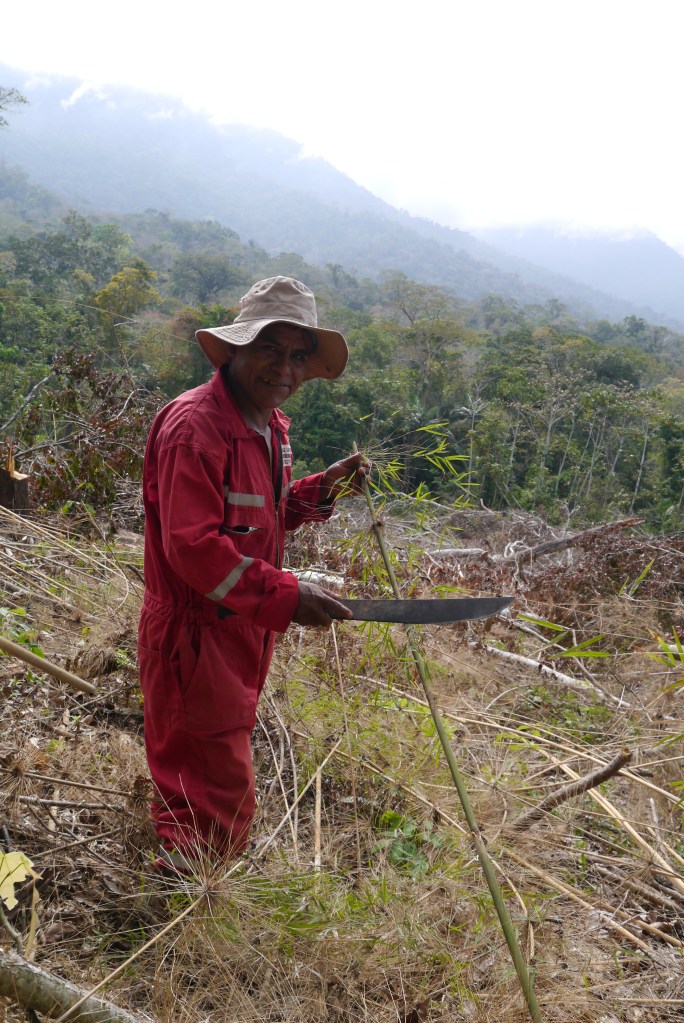
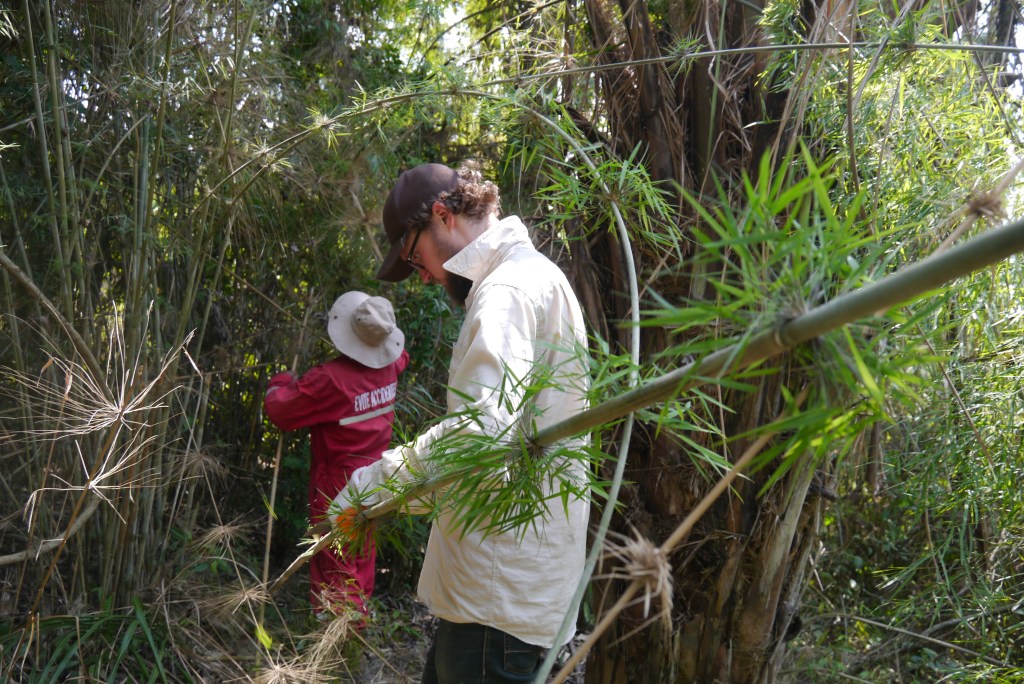
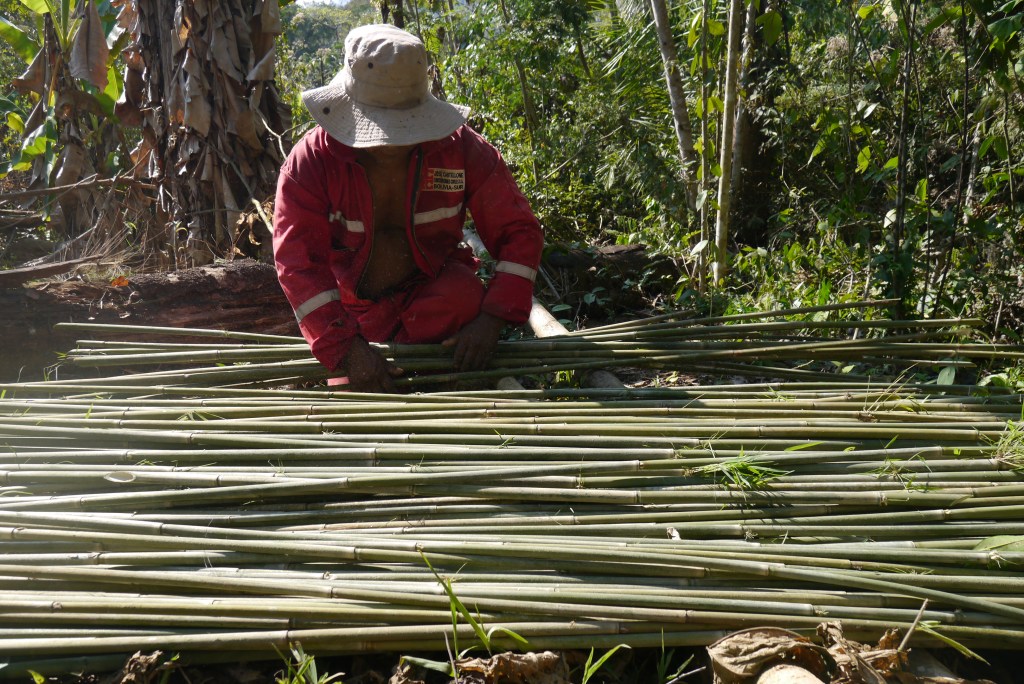
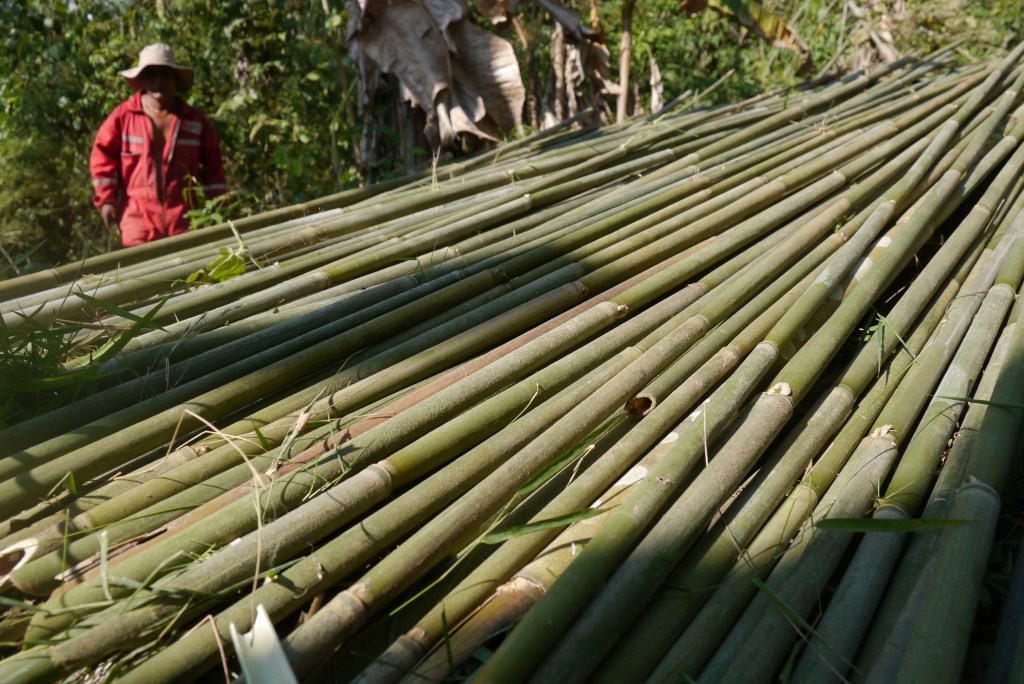

ESP: Alto Beni no solo es uno de los municipios de la provincia de Caranavi (departamento de La Paz), sino que también define un área geográfica natural (ecorregión más amplia), parcialmente integrada dentro de los departamentos de La Paz, Cochabamba y Beni. Se encuentra en el valle sinclinal del curso medio del río Beni en el piedemonte andino-amazónico. Lo que comúnmente se conoce como “chhalla de Alto Beni” son en realidad dos variantes diferentes (tipo lluq’a y qipu). Crecen en áreas distintas de la región Alto Beni. La variante lluq’a se encuentra en el lado izquierdo del río Beni, alrededor de San Antonio y hacia San José en la parte sureste de la TCO Mosetén, mientras que la variante qipu crece en el lado derecho del río Beni hacia Inicua Bajo, en la parte noroeste del TCO Mosetén. Ambos tienen distintos ciclos de vida lo que sugiere que son dos especies diferentes. En 2018, acompañé al chhallero René Condori durante la cosecha de la qipu chhalla. Antes de que empezáramos a recolectar, René inicialmente me enseñó a reconocer los culmos maduros y cortarlos correctamente. Este chhallero muy experimentado me explicó que los culmos maduros cambian de color de verde claro a un tono verde más oscuro y luego amarillento/gris. Una vez en el bosque, con las matas de chhalla frente a nosotros, señaló los culmos maduros que debían recolectarse. Estos se encontraban en el centro de las matas, mientras que los culmos jóvenes y prematuros crecían hacia la periferia. Dependiendo de la distribución de los culmos, a veces era difícil alcanzar el centro sin dañar los culmos más jóvenes en la periferia. Observé cómo René lograba cortar una entrada en forma de túnel en la mata y retiraba los culmos maduros del centro. Incluso dejaba algunos culmos maduros o envejecidos para que los suaves e inmaduros en la periferia no colapsaran. René además afirmó que los culmos maduros deben cortarse desde el primer o segundo nudo, contando cuatro o cinco entrenudos sucesivos. Esta es la longitud estándar de los culmos de chhalla para su venta, lo que facilita el conteo de entrenudos en el amarro (ay. qhiwi). Estos qhiwis, una palabra que deriva del verbo aymara qhiwiña que significa “llevar una cosa grande y pesada sobre el hombro”, consisten en 150, 200, o 300 culmos, cada uno con cuatro o cinco entrenudos. Dado que los tubos de tuquru son más largos y además se venden por unidad (no en amarro), los tuqurus generalmente se cortan por entrenudo. Tanto los entrenudos de chhalla como de tuquru se cortan por encima de los nudos, ya que los luriris usan los entrenudos desde el nudo hacia abajo, con el nudo convirtiéndose en la parte distal de la flauta. La parte del culmo de las hojas es más húmeda y suave y por lo tanto no es adecuada para una flauta. A veces, las matas están extremadamente congestionadas con culmos enredados bajo tensión extrema. Esto frecuentemente produce situaciones peligrosas, y se debe tener cuidado para no resultar herido por culmos con bordes afilados que vuelven a su lugar después de ser cortados. Era muy importante tener una hoja de machete extremadamente afilada, por lo que tuvimos que afilarlo continuamente. Quitamos todas las ramas y hojas de los culmos recolectados y los llevamos a un lugar con semi-sombra en el borde del bosque, apoyándolos sobre un tronco de árbol caído para que se sequen, de modo que los culmos no se pudran en el suelo húmedo del bosque. Lo que aprendí de René fue que es fundamental no cortar las matas por completo porque los brotes más jóvenes siguen creciendo desde el rizoma. Dijo que, en ciertos intervalos, las chhallas pueden recolectarse de la misma mata durante varios años (la fase de estabilidad), si se hace correctamente. René suele trabajar más frecuentemente durante la temporada seca, y solo de manera espontánea durante la temporada de lluvias, cuando el clima lo permite. Dijo que las chhallas se regeneran durante la temporada de lluvias y se debe tener más cuidado durante la recolección. Además, las chhallas estarían más infestados por insectos, hongos y perforadores, lo cual está científicamente relacionado con mayores contenidos de almidón (azúcar) durante la temporada de lluvias. De hecho, sus modos de recolección de chhalla de baja invasión y selectiva antes mencionados también están vinculados a su estrategia de sustento. Nunca cortaría las chhallas completamente, ya que son la base material para su bienestar económico futuro. René interpreta la rápida expansión de la frontera agrícola y la destrucción de los hábitats de chhalla en Alto Beni como una gran amenaza para su trabajo. Ya está en constante búsqueda de nuevas poblaciones de chhalla, ya que año tras año se queman los sitios de abastecimiento conocidos. Alrededor de comunidades interculturales en el lado oeste del río Beni, donde se obtiene la lluq’a chhalla por ejemplo, los bosques antiguos fueron cortados y quemados en gran parte por tala y quema. Los interculturales preparan el bosque cortando el sotobosque, que dejan secar durante varias semanas. A menudo no permiten la recolección de chhallas, ya que utilizan los culmos de chhalla secos como parte del material de tala, que luego queman para producir la chacra con capas de ceniza ricas en nutrientes, haciendo el suelo temporalmente fértil. He experimentado tal incendio forestal en Alto Beni, que se extendió rápidamente y desarrolló enormes fuentes de fuego de unos 10 a 15 metros de altura, alcanzando las copas de los árboles del bosque amazónico-andino. De hecho, la chhalla se usa como un acelerante natural del fuego.

 The Musical Bamboos of the Bolivian Andes